Prenatal Exercise: What, Why, How, What If
15/1/2026
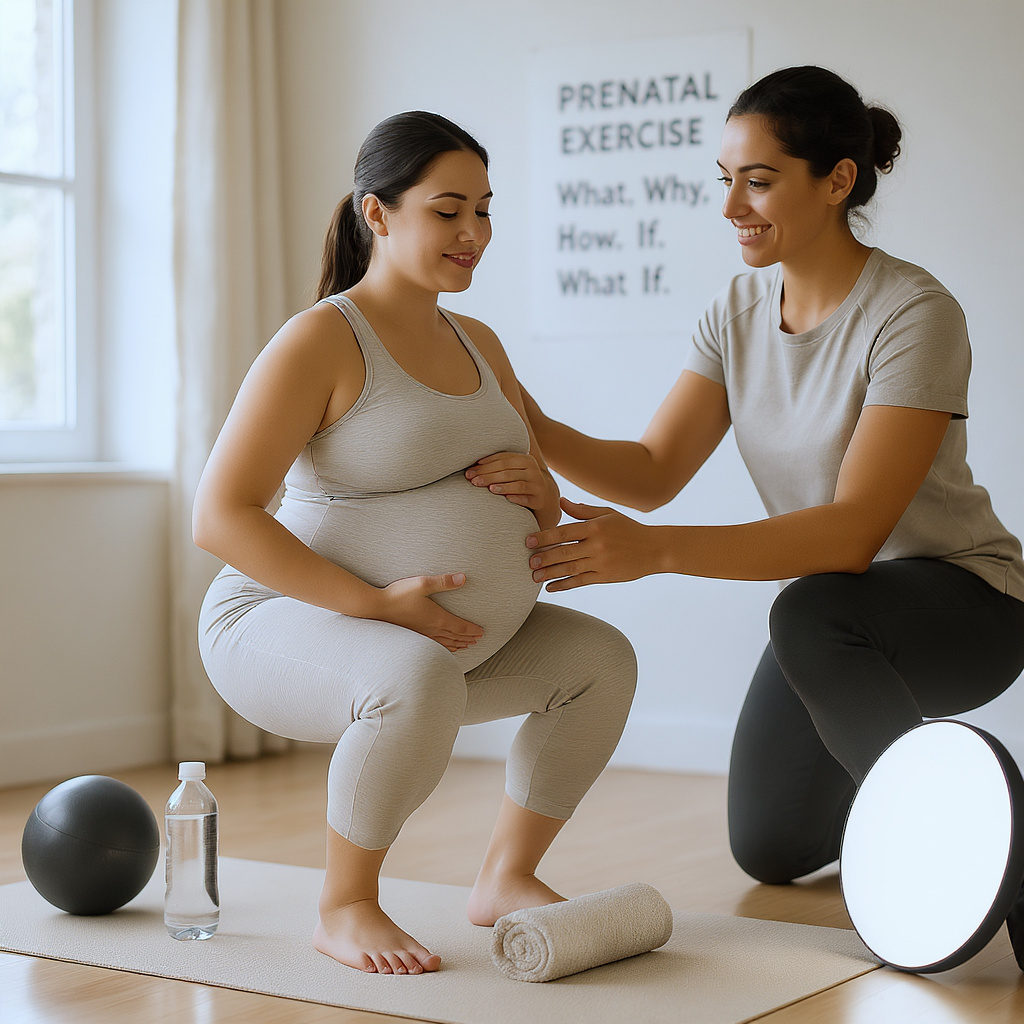
What: Practical, evidence-informed guidance for safe exercise during pregnancy — gentle cardio, strength, mobility, breathing and pelvic-floor work tailored to each trimester. This is a flexible companion, not a rigid program.
Why: Moving safely can support strength, mood, sleep and preparation for childbirth. Before starting or changing activity, check with your prenatal provider. Use perceived exertion and the talk test rather than strict heart-rate targets.
How:
- First trimester: short, gentle sessions — walking, prenatal yoga, light bands; focus on pelvic-floor awareness and rest as needed.
- Second trimester: core-friendly strength (supported squats, seated rows, side-lying leg work), low-impact cardio (swim, cycle), wider stance for balance.
- Third trimester: shorter sessions emphasizing breath, pelvic-floor coordination, hip mobility, supported squats and gentle walks.
Sample micro‑plans: 10–15 min gentle cardio; 20–30 min strength circuit (2 rounds of supported squats, band rows, glute bridges, side-lying hip lifts); daily 5–10 min pelvic-floor + diaphragmatic breathing; evening mobility 10–15 min.
Modifications: chair/wall support, reduced range of motion, longer rest, pool workouts. Useful equipment: resistance bands, supportive shoes, stability ball, pregnancy cushion.
What if:
- Red flags — stop and contact your provider: vaginal bleeding, regular painful contractions, sudden swelling of face/hands, chest pain, dizziness or decreased fetal movement.
- If you have pelvic pain, leakage, diastasis, prior preterm birth, multifetal pregnancy or other concerns, ask for a referral to a pelvic‑health physiotherapist or prenatal specialist.
- Postpartum: begin with gentle breathing, pelvic‑floor reconnection and short walks once cleared; progress gradually and seek assessment before heavy lifting.
Quick reminder: confirm contraindications and timing with ACOG/NHS or your clinician. Trust your body, rest when needed, and choose small, consistent steps that feel safe and supportive.
Articles for you

Understanding Your Baby's First Year Milestones: A Gentle Guide for New Parents
Watching your baby grow is akin to reading a fascinating book. Each chapter brings its own surprises, laughter, and perhaps a few moments of doubt. Un...
Exercise During Pregnancy: Finding Comfort and Joy
Pregnancy often brings a range of discomforts, such as back pain and fatigue, impacting an expectant mother's quality of life. These inevitable pains ...

The Gentle Path: Navigating Prenatal Care and Babywearing Safely
The Gentle Path: Navigating Prenatal Care and Babywearing Safely Welcoming a new life into the world is a monumental adventure filled with excitement,...