Practical Guide to Storing and Using Breast Milk (Inverted Pyramid)
17/3/2026
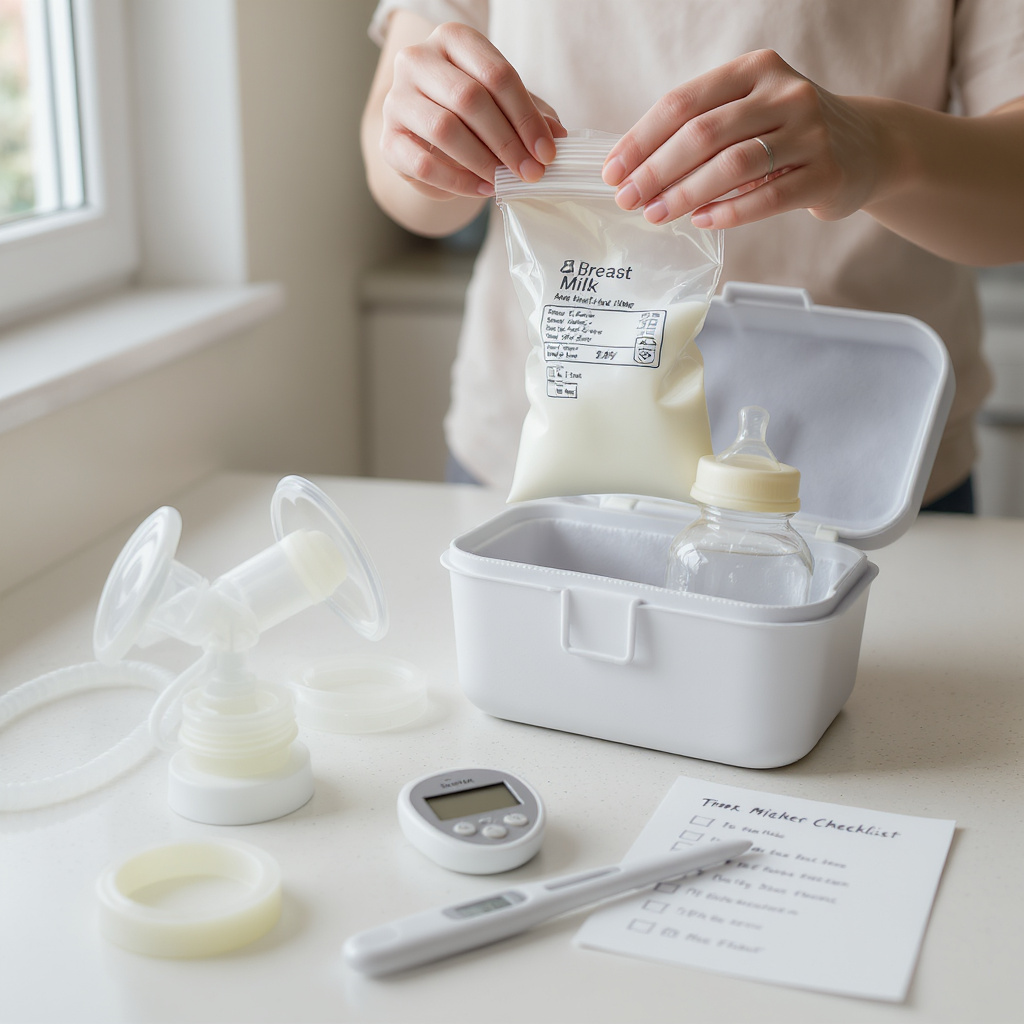
Main point: Stored breast milk preserves the unique nutrition and immune benefits of your milk and gives you flexibility for work, rest, travel, or sharing feeding duties—while safety depends on simple hygiene, correct containers, and following up-to-date storage rules from trusted authorities.
Key benefits and actions (what to do first):
- Nutrition & protection: Breast milk contains proteins, healthy fats, antibodies and bioactive factors that support digestion, immunity and growth.
- Practical flexibility: A labeled stash lets partners or caregivers feed, supports returning to work, and provides buffers for appointments or travel.
- Donor milk option: When your milk isn’t available, regulated milk banks (for example, HMBANA or local equivalents) provide screened, pasteurized donor milk—safer than informal sharing for medically vulnerable infants.
- Immediate actions: Wash hands before expressing, use clean pump parts and purpose-made storage containers or bags, label each container with date (and name if sending out), and rotate oldest first.
Important handling & safety practices (supporting details):
- Containers: Use BPA-free bottles or breast milk storage bags sized to typical feeds; leave a little headspace when freezing.
- Thawing & warming: Thaw in the refrigerator overnight or under cool running water. Gently swirl to recombine fats; warm in a bowl of warm water if desired. Never use a microwave.
- After feeding begins: Use remaining milk within the local recommended timeframe or discard per your provider’s guidance.
- Travel: Keep frozen milk between ice packs in an insulated cooler, open as little as possible, and label clearly for caregivers.
When to contact a clinician (bottom-line safety):
- Discard & consult: If milk smells rotten/sour, has visible mold or unusual curdling/color, or if your baby becomes ill after a feed, stop use and call your pediatrician or lactation consultant.
- NICU/medically fragile infants: Follow neonatal team protocols—sterile technique, facility containers, or use of pasteurized donor milk may be required.
Background, extra tips & resources:
- Milk is dynamic: Colostrum and mature milk contain shifting bioactive components; slight separation or a tangy smell after freezing can be normal (enzyme activity like lipase) though some babies notice taste changes.
- Supply supports: Gentle methods like scheduled pumping, power‑pumping, consistent removal, good nutrition and hydration may help—check with an IBCLC before starting supplements or intensive techniques.
- Helpful resources: CDC, AAP, WHO guidance for exact storage times; local hospital lactation teams, IBCLCs, La Leche League, and regulated milk banks (e.g., HMBANA) for donor milk and hands-on support.
- Flag: Numeric storage limits can vary by setting—verify current room-temp, refrigerator, and freezer timelines with CDC/AAP and your lactation consultant before making a firm plan.
Small routines—clean parts, clear labeling, storing in feed-sized portions, and asking for help—make stored milk practical and reduce stress. Reach out to your lactation team or pediatrician for personalized guidance.
Articles for you

Understanding Your Baby's First Year Milestones: A Gentle Guide for New Parents
Watching your baby grow is akin to reading a fascinating book. Each chapter brings its own surprises, laughter, and perhaps a few moments of doubt. Un...

Bonding with Your Premature Baby: Building a Connection Against All Odds
Bonding with Your Premature Baby: Building a Connection Against All Odds Welcoming a baby into the world is an experience filled with hope and joy, bu...

Navigating the Challenges and Triumphs of Bottle Feeding
For many parents, the decision to bottle feed comes with its own set of challenges and is often met with a whirlwind of emotions. One of the significa...