Postpartum swelling: what to expect and when to seek care
10/1/2026
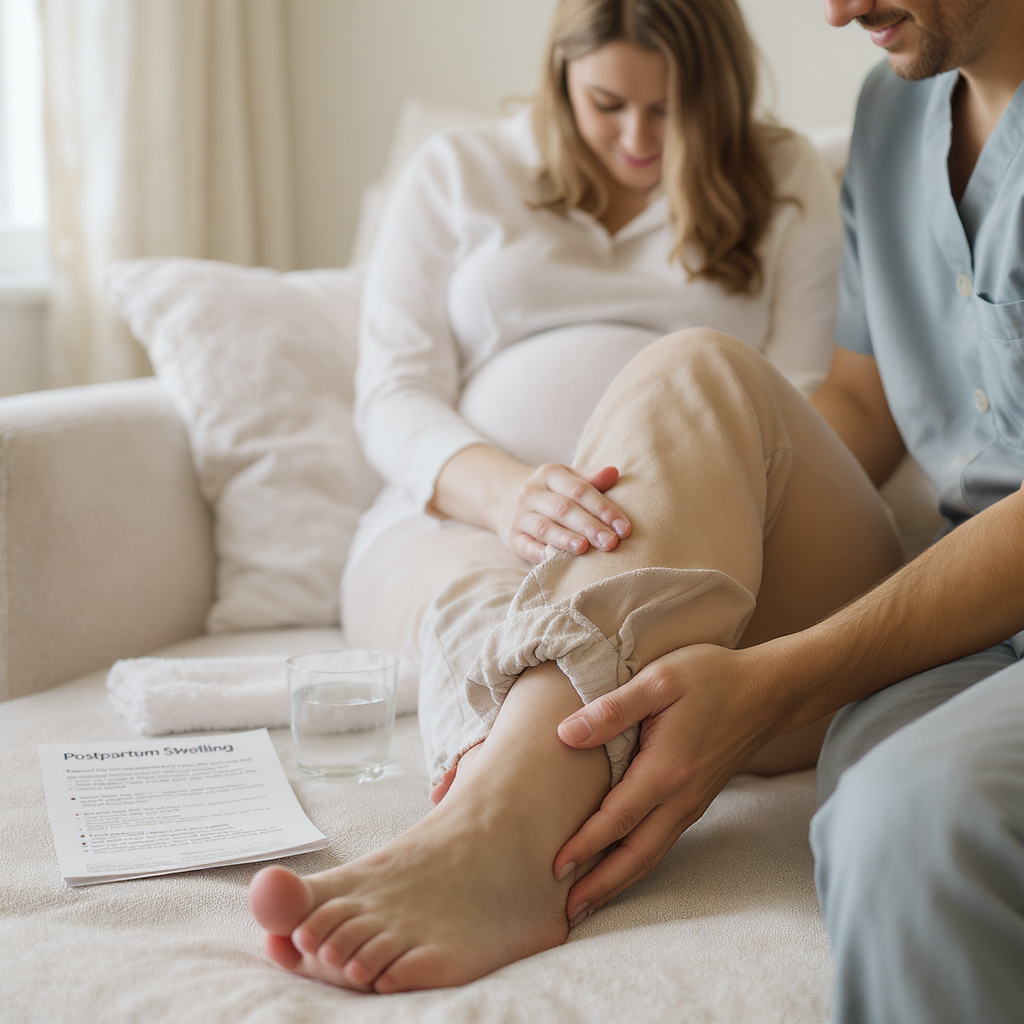
Main point: Mild postpartum swelling (puffiness in feet, ankles, hands, face or breasts) is common and usually gets better over days to weeks; seek urgent care if swelling is sudden, painful, one-sided, or accompanied by severe headache, vision changes, chest pain or shortness of breath.
Helpful, evidence-based actions:
- Elevate your feet when possible and wear comfortable, supportive shoes or compression socks if recommended.
- Move gently—short walks, ankle pumps, and light leg/arm movement improve circulation and speed fluid return.
- Stay well hydrated, moderate salt (no strict restriction unless advised), and use cool compresses for local puffiness.
- For breast swelling, wear a supportive bra; warm showers and gentle expression or pumping can ease engorgement while protecting milk supply.
Red flags—contact your provider right away:
- Sudden or severe swelling in one leg (warm, painful, red) — possible DVT.
- High blood pressure with severe headache, vision changes, or upper abdominal pain — possible postpartum preeclampsia.
- Shortness of breath or chest pain, high fever, or signs of infection (worsening wound redness, foul discharge).
What to expect and timelines: Swelling often peaks in the first 48–72 hours after birth, especially after IV fluids, then gradually improves over days to weeks. If swelling worsens, remains unchanged after 2–3 weeks, or is asymmetric, ask for evaluation.
Medications and referrals: Diuretics are not routinely recommended postpartum and should only be used under clinician guidance. If needed, verify breastfeeding safety (resources: LactMed). Persistent or unusual swelling may prompt referral to vascular/lymphatic specialists or physiotherapy trained in manual lymphatic drainage.
Practical tips and planning: Remove rings while hands are puffy, choose loose clothing, prop feet up for short rests, break up long standing periods, coordinate feeds so you can elevate feet, and ask for lactation support for breast issues.
Background (why it happens): Pregnancy increases blood volume and tissue fluid; after birth hormones change and your body shifts fluid back into the bloodstream leading to increased urination (diuresis) and temporary puffiness. Time, gentle movement, and simple self-care usually bring steady improvement.
If you are unsure or worried, contact your care team—early review is reassuring and can prevent complications.
Articles for you

Navigating Postpartum Mental Health: A Supportive Guide
Postpartum mental health is a crucial aspect of a woman's journey into motherhood, encompassing both emotional and psychological dimensions. During th...

Room Sharing vs. Co-Sleeping: What’s Best for You and Your Baby?
Room Sharing vs. Co-Sleeping: What’s Best for You and Your Baby? As new parents, navigating the waters of sleep arrangements can feel overwhelming. Tw...

Baby Car Seat Safety: What, Why, How, What If
What: Practical guidance on choosing, installing, and using car seats for babies and young children. Covers seat types (rear-facing infant, convertibl...