High Chair & Feeding Gear: Safe Fit, Less Mess, Calmer Meals
1/6/2026
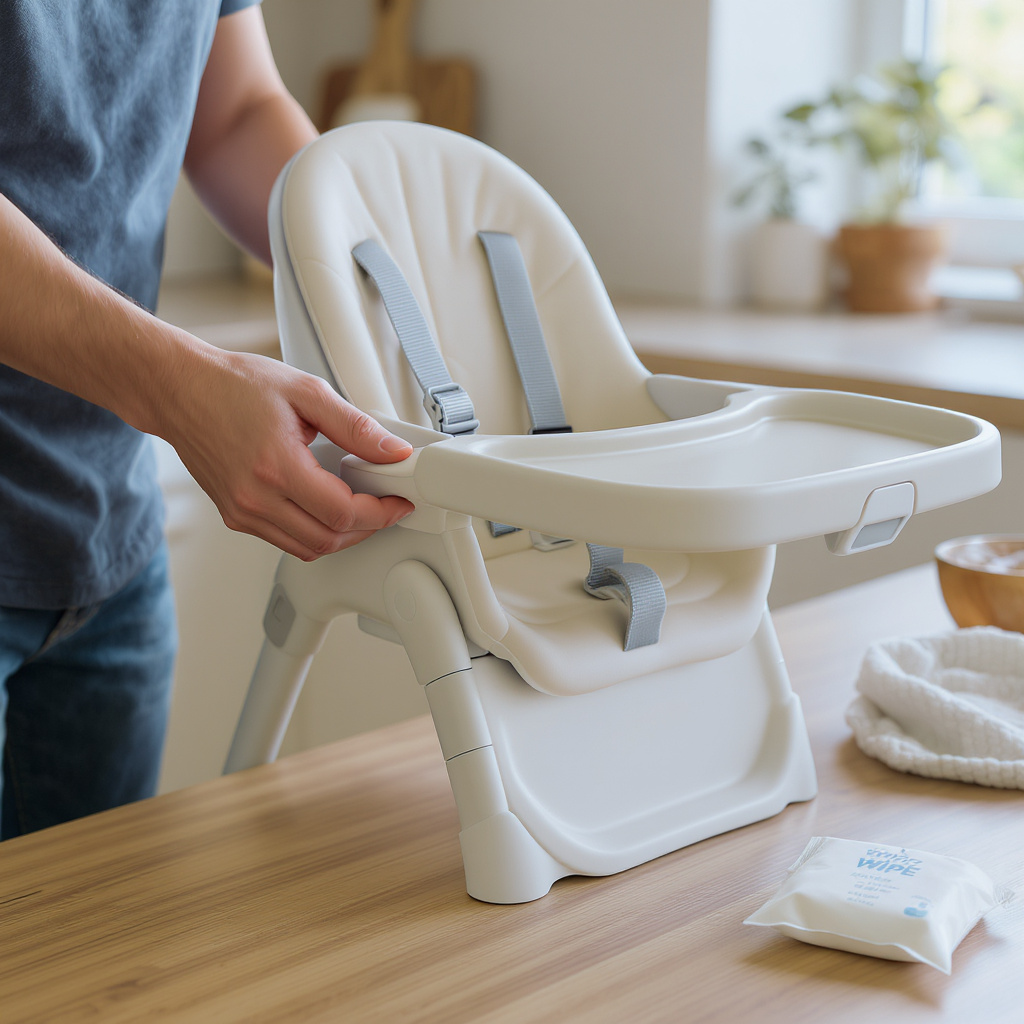
Main point: Choosing a high chair and feeding gear that truly works for your baby comes down to one priority first: safe, supported posture—then comfort, stability, and cleanup ease. When baby sits correctly, mealtimes tend to be calmer, with fewer slips, fewer interruptions, and less “stop-and-adjust” for you.
Safe fit (do this first): The chair should help baby sit upright with their back supported, hips and knees comfortably bent (not hanging), and feet supported so they’re not sliding down or curling awkwardly.
- Check harness placement: use the harness exactly as the manufacturer instructs—snug but not overly tight, with no slack that allows slumping.
- Use the footrest (if available): supported feet help maintain posture during the meal.
- Verify stability: a wide, stable base should not wobble when baby shifts weight or when you gently move the tray.
Comfort improves real safety: Proper positioning supports safe swallowing and reduces the need to keep repositioning your baby. When baby’s body stays aligned, feeding tends to flow more smoothly—so you can focus on the feeding rhythm rather than troubleshooting posture mid-meal.
Quick “must-check” routine (use every meal):
- Skip shortcuts: don’t skip harness use just because baby looks steady—babies often shift and lean once curiosity kicks in.
- Keep straps flat: make sure straps lie flat and aren’t twisted, which can reduce effective support.
- Confirm tray lock & fit: tray attachments should secure firmly and remain easy to wipe.
Key decision factors (what to match next): Once posture and stability are right, match the chair/gear to your baby’s current stage and your feeding style (purees, spoon-feeding, finger foods, or a combination such as BLW).
- Early readiness (when baby can sit with support): prioritize upright positioning and a harness that stabilizes the body. Use the most upright setting that remains comfortable and appropriate for your baby.
- Spoon-feeding / purees: choose an adjustable tray position so baby doesn’t slump away. Easy-to-clean surfaces matter because quick resets keep meals manageable.
- More independence / thicker textures: look for surfaces that catch drips without trapping food in hard-to-reach corners; aim for gear that supports staying upright while baby reaches.
Feeding gear that reduces friction:
- Bib strategy: wipeable bibs are often the easiest win; smock-style options can add coverage if they don’t restrict arm movement or ride up.
- Utensils: soft tips for early spoon use; ergonomic handles can help as skills grow.
- Cups: transition cups can help when baby shows readiness; avoid moving to open-cup use too early if posture/coordination isn’t there yet.
- Plates/bowls (if using suction): suction can help with supervision, but a simpler setup may be easier if suction doesn’t hold reliably with liners/trays.
Cleanup is part of the system (so you’ll actually keep up hygiene):
- Removable, wipeable/dishwasher-safe parts: remove tray parts and liners for thorough cleaning instead of “scrub what you can reach.”
- Odor/stain control: prioritize materials and designs that don’t trap moisture; follow the manufacturer’s care instructions for cleaning products and drying.
- Mess-proof design: tray liners/covers that lie flat, stay put, and remove in one piece reduce hard-to-scrape residue.
- After-meal routine: scrape off food, wipe high-contact surfaces right away, and rinse/load dishwasher-safe parts when convenient.
Common missteps to avoid:
- Overstuffing with extra cushions: added padding can alter strap fit and the chair’s intended support. Use only the liner/insert configuration recommended by the manufacturer.
- Wrong chair size/height: if baby slides, slumps, or leans out of alignment, re-check seat height and strap positions before continuing.
- Unstable placement: set the chair on a flat, firm surface away from edges and drop-offs.
- Worn or missing parts: inspect tray locks, buckles, and straps regularly; replace components if anything is cracked, loose, frayed, or no longer locks securely.
Stage changes = posture changes: As baby grows (more reaching, more leaning, thicker textures), reassess the setup. Adjust harness, seat height, and tray position so baby stays upright and supported instead of gradually slipping out of alignment.
- When reaching starts: move the tray to a comfortable reach so baby doesn’t have to slouch forward to get food.
- If baby reclines/slumps: don’t just wait—adjust seat/straps to re-support hips, knees, and back.
Optional but important: verify recalls: before you rely on any high chair, check that the model isn’t listed in the U.S. Consumer Product Safety Commission (CPSC) recall database: https://www.cpsc.gov/Recalls.
Fact-check note (evidence-based guidance): For feeding safety and posture/supervision principles, use current guidance from trusted authorities such as the American Academy of Pediatrics (AAP) and general complementary feeding safety context from the Centers for Disease Control and Prevention (CDC). Always follow your specific chair’s manual instructions and your pediatrician’s stage-specific advice.
Bottom line: Build a repeatable routine where baby is supported and upright, the harness and tray are secure, and cleanup is realistic. That combination is what makes meals safer, calmer, and more consistent—meal after meal.
Articles for you

Understanding Stretch Marks: A Gentle Guide for Expecting Mothers
As you embark on the wondrous journey of pregnancy, you're met with myriad physical changes, each as unique and significant as the miracle of life its...

Healthy Pregnancy Topic Hub: Comprehensive Pillar Post
Welcome to our comprehensive guide on nurturing a healthy pregnancy. This pillar post offers an overview of key considerations and links to in-depth c...

Understanding Baby Acne: A Parent's Guide to Care and Confidence
Baby acne, often referred to as neonatal acne, is a common and typically harmless skin condition that many newborns experience. It usually appears as ...