Developmental Differences: From Patterns to Support (Pillar + Cluster Framework)
5/6/2026
Online or word-of-mouth comparisons can feel loud when you’re watching your baby week to week. It’s normal to experience a surge of confusion, an unexpected guilt (“Did I miss something?”), and fear about what it might mean. That emotional mix can quickly turn into urgency, where every new variation feels like a deadline. This pillar guide is here to help you slow down, organize what you’re seeing, and choose next steps thoughtfully—without needing to diagnose on your own.
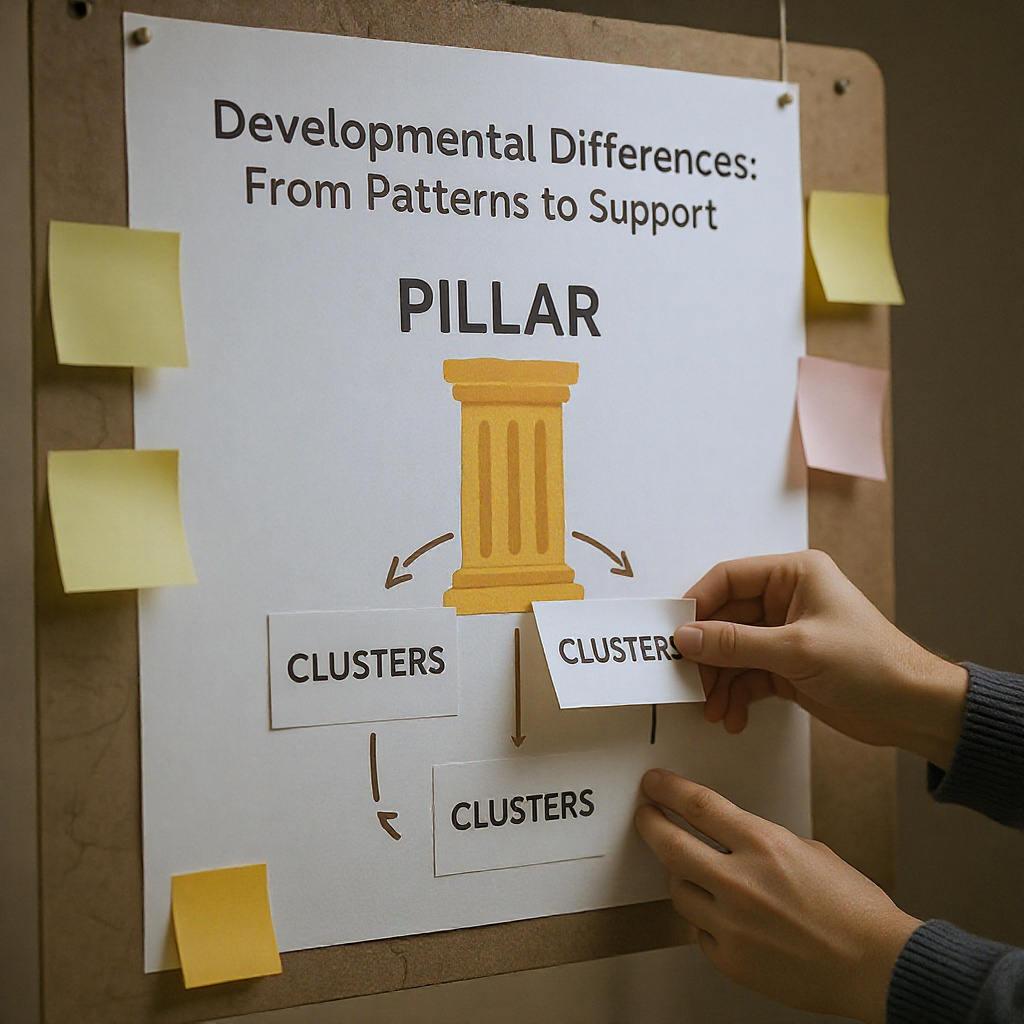
This is a pillar that covers the broad topic: how to move from “something seems different” to supportive, evidence-based action. Then, you can link to shorter cluster posts that go deeper into each subtopic below (for SEO and to build clear internal linking across your site).
What “developmental difference” can look like
Development doesn’t progress in one straight line. Many babies follow an uneven pace: a skill may arrive, pause, and then reappear in a new form. Variability can be influenced by individual timing, temperament, health, sensory access (hearing and vision), and opportunities to practice. Sometimes progress is simply slower for a period—especially during recovery from illness, feeding challenges, or other early medical stressors.
That said, not all patterns are the same. Clinicians often find it most useful to focus on trends over time and whether there are concerning patterns, not whether one milestone is present on one day.
Delay vs. disability (in practical terms)
Professionals may use the word “delay” to describe when development in one or more areas is behind what’s typically expected for age. A delay does not automatically mean a permanent condition. By contrast, “disability” is often used when difficulties are expected to be long-term and significantly affect daily functioning. In real life, you may hear “delay” first—because it’s about what’s happening now and what support may help most.
Think in milestone categories (not a single score)
Instead of tracking one pass/fail number, group observations into broad areas:
- Communication: sounds, babbling, words/gestures, responding to voices
- Social connection: eye contact, shared attention (looking where you point), back-and-forth engagement
- Movement: rolling, sitting, reaching, crawling, weight-shifting
- Daily living skills: feeding behaviors, sleep-wake patterns, how your baby handles routines like soothing and waking for feeds
When you group observations this way, you’re more likely to notice patterns that are clinically meaningful—such as “social interest is present, but movement/tone feels different,” or “vocal play seems to have stopped building.”
Red flags tend to matter more than missing one milestone
A single milestone gap can reflect normal timing differences or a temporary adjustment period. But clinicians often pay closer attention when you notice patterns such as:
- Limited response to sound
- Rare or inconsistent eye contact or reduced social engagement
- Loss of previously gained skills (possible regression)
- Unusual muscle tone (very floppy or extreme stiffness)
- Persistent feeding difficulties that interfere with growth, comfort, or energy
If any of these feel familiar, discuss them promptly with your pediatrician. This does not diagnose anything by itself—it helps guide faster, more targeted evaluation.
Pillar Cluster Links: how to structure your site
Use this pillar post as the hub. Then create cluster posts that each cover one subtopic in depth, linking back to this page and linking to each other. A strong cluster set might include:
- Cluster 1: “Milestone windows by age: what to watch (and how to interpret variability)”
- Cluster 2: “Red flags vs. normal timing: when to call your pediatrician”
- Cluster 3: “Regression: what it means and why it changes the timeline for evaluation”
- Cluster 4: “Hearing and vision: how sensory access shapes milestones”
- Cluster 5: “Prematurity and adjusted age: age-corrected assessment explained”
- Cluster 6: “What developmental screening is vs. what an evaluation is”
- Cluster 7: “Therapies explained for parents: SLT, OT, PT, and what progress looks like”
- Cluster 8: “What you can do at home: practice without pressure (routine-based support)”
- Cluster 9: “How to measure progress: trends, engagement, and functional goals”
Each cluster should end with a short call-to-action that gently points readers back to this pillar: “Start with patterns, organize examples, then use screening/evaluation pathways.”
What to do next: move from noticing to next steps
When you’re ready to talk with your pediatrician, you don’t need a diagnosis. You need a clear picture of what you’ve noticed and how it has changed. A helpful approach is:
- Bring dates + examples: when you first noticed it, when you think it changed, and what specific behaviors you’re seeing now
- Include short videos if possible: eye tracking, turn-taking, reaching attempts, tone during play
- Share context: feeding or sleep changes, illnesses around the time the change began, ear infection history, and prematurity details (if relevant)
- Ask about screening and timelines: “What tool will you use at this age, and what are the next steps if it’s concerning?”
- Ask whether hearing/vision checks are appropriate: especially when sound or eye tracking seems inconsistent
Scheduling evaluation: common referral directions
If concerns are persistent or clear, it’s reasonable to request referrals without waiting for “perfect proof.” Referrals commonly include:
- Hearing testing
- Vision/eye assessment
- Speech-language evaluation (communication, gestures, back-and-forth interaction, understanding)
- Physical therapy and/or occupational therapy (tone, movement quality, fine motor, sensory comfort, participation in routines)
Referrals reduce uncertainty by matching your observations to the right expertise.
Support immediately while you wait (embedded practice)
It’s understandable to want to “do something” while appointments are pending. The most helpful support is usually routine-based and embedded—small practice opportunities offered when your baby is calm and available.
- Responsive back-and-forth: talk or gesture, then pause and wait. Give your baby time to respond.
- Narrate daily care: short, warm phrases during feeding, diapering, bath time, dressing, and play.
- Turn play into shared attention: watch what your baby notices; bring attention back gently.
- Movement in safe, tolerable doses: use tummy-down alternatives (like on a caregiver’s chest) if flat tummy time is hard; avoid forcing distress.
- Make reaching easier: place toys within grasp, sometimes slightly to the side to encourage controlled rotation.
The evidence-based principle here is consistency plus repetition—not intensity. Short, repeated moments typically work better than long practice sessions that drain everyone.
What progress looks like while you track
Waiting can feel like standing still, so it helps to define progress in a way both you and clinicians can recognize. Progress is usually measured as change over time across communication, social engagement, movement, and daily participation—not just one milestone checklist item.
- Skill-building trends: turn-taking becoming more frequent, reaching starting to include more intentional movement, eye contact appearing more often during calm routines
- Consistency across contexts: skills showing up in multiple settings, not only on one “good day”
- Functional outcomes: improved participation in care routines, clearer gestures/sounds for requesting or greeting, more comfort during practice
You can keep a simple weekly progress log noting: what’s building, what feels stuck, what supports help, and any medical context that may affect day-to-day performance.
Special note: emotional support matters
Developmental concern can increase anxiety and grief—sometimes alongside sleep loss and postnatal stress. Shame is common (“I should have known”), but delays are not a parent’s failure. If your worry feels relentless or you’re struggling day-to-day, reach out to your primary care clinician, OB/midwife, or a mental health professional. Supporting your mental health supports your baby’s learning conditions too.
Bottom line for the pillar hub
You don’t need to solve the “why” alone. Start with patterns (what you notice and how it changes), organize examples (dates, behaviors, videos if possible), and follow evidence-based pathways through screening and evaluation. As you do, you can begin supportive, routine-based practice right away—so the wait doesn’t have to feel like helplessness.
Next step (recommended internal linking CTA)
For readers who want deeper detail, link them to your first cluster right after they finish this pillar. Example: “If you’re wondering what’s typical by age, start with Cluster 1: Milestone windows by age—how to watch without panic.”
Articles for you

Navigating Your Pregnancy: Weight Gain, Epidural Decisions, and Supportive Care
Understanding Your Pregnancy Journey: Weight Gain, Epidurals, and Prenatal Care Pregnancy is a remarkable journey, a period brimming with joy, anticip...

Vaccines for Your Baby: Quick, clear guidance in the inverted pyramid
Vaccines protect your baby from serious illnesses and help keep your whole community safer—by following the recommended schedule you give your child s...

Woven Together: Crafting the Tapestry of Maternity Leave, Nursery Dreams, and Babywearing Bliss
Woven Together: Crafting the Tapestry of Maternity Leave, Nursery Dreams, and Babywearing BlissAs you prepare to welcome your little one into the worl...